Disability Specific Resources
Did you know that no one is immune to developing a disability, and almost no one, regardless of race, gender, religion or economic status, will go through life without experiencing some form of physical impairment? People with disabilities make up the largest minority group in the United States. 1 in every 5 Americans is a person with a disability. Disabilities can be visible or invisible and they are the only group anyone can join at any time: in the split second of birth, in an accident, or through an illness.
What are Neurodevelopmental Disabilities?
Neurodevelopmental disabilities are conditions that affect how your brain functions and works. These conditions commonly include Autism Spectrum Disorder (ASD), Attention Deficit Hyperactivity Disorder (ADHD), Fragile X, Down Syndrome, and intellectual disability (ID). We have included more information on these conditions below.
What is Neurodiversity?
“Neurodiversity” is emerging as the most used term to describe people with Neurodevelopmental disabilities (NDD). The idea is that there’s no “correct” way for the brain to work. Instead, there is a wide range of ways that people perceive and respond to the world, and these differences are to be embraced and encouraged.
The term “neurodiversity” is not a medical term.
Attention Deficit Hyperactivity Disorder (ADHD)
Attention Deficit Hyperactivity Disorder (ADHD) is a neurodevelopmental disability associated with difficulty paying attention, hyperactivity, and impulsivity.

Developmental Delays
Development is the biological and behavioral growth and change that occurs during a lifetime. Understanding and observing a child’s development is important for detecting possible challenges or delays. Developmental disabilities are most often diagnosed as a result of concerns family members have about their child’s development. Getting early assessment and intervention for developmental disabilities is important for helping individuals develop to their full potential.
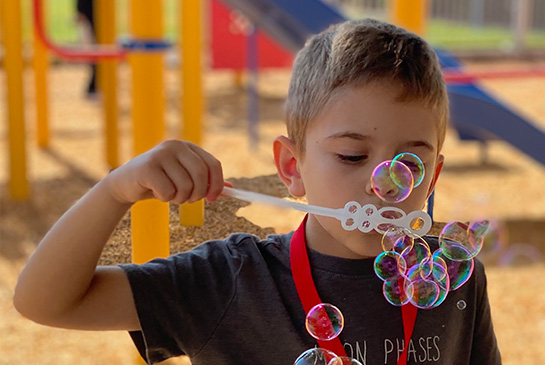
Autism Spectrum Disorder (ASD)
Autism is a complex developmental condition that involves persistent challenges with social communication, restricted interests and repetitive behavior. It is considered a spectrum condition, which means that it affects people very differently.
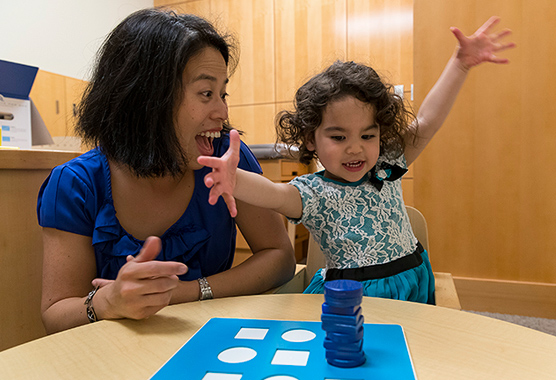
Down Syndrome
Down syndrome is a condition in which a baby is born with an extra chromosome. Instead of the typical 46 chromosomes, babies with Down syndrome have an extra copy of chromosome 21. The condition is also called “Trisomy 21”. This extra copy of chromosome 21 changes the body’s and brain’s normal development and causes mental and physical challenges for the child.
Cerebral Palsy
Cerebral Palsy is a neurological disability caused by a non-progressive brain injury or malformation that occurs while a child’s brain is under development. Cerebral Palsy affects body movement, muscle control, muscle coordination, muscle tone, reflex, posture and balance. Every case of cerebral palsy is unique to the individual.

Fragile X Syndrome
Fragile X Syndrome is the most common inherited cause of intellectual disability and the most common known single-gene mutation leading to autism. The clinical features of this condition range from mild emotional, sensory and/or learning problems to severe intellectual disabilities and autism.